

Latest Products


Contact Us
- 612, Building 9, Donghai Cross-border E-commerce Ecosphere, Fengze District, Quanzhou
- ivy.su@cnccib.com
- +8613505927626
Why Choose Us
High Production Capacity
CCIB is producing plastic machine and plastic film as the core industry of manufacturing enterprises. The total assets is 1.2 billion, with 500 workers. Our company gained the national patent over 20 items.
Quality Assurance
We focus on technological innovation, and introduce the production technology and processing equipment of world's advanced level. Our quality assurance technicians verify every lot of parts to ensure it meets our customers’ high standards.
Wide Product Range
It's mainly on plastic The main products of Machine and Plastic film are as follows: film blowing machine, film winding machine, recycling machine, printing machine, bag making machine.
Leading Service
We independently complete the R&D, production, marketing, sales, and technical support processes. You just need to send your requirements via email and we can customize the product for you.
What is PEVA Film?
PEVA (Polyethylene Vinyl Acetate) plastic film is a flexible plastic synthesized from two materials, PE and EVA. The properties of PEVA depend on the ratio of these two components. The higher the PE ratio, the better the plastic film will adhere. If the EVA ratio is high, the film will be soft and heavy.
 Clear PEVA Tablecloth
Bring hassle-free style to your dining table with this PEVA tablecloth from CCIB. This rectangular PEVA tablecloth makes a practical addition to your table linens.
Add to Inquiry PEVA Plastic Film
PEVA film is a popular substitute where PVC has been banned mainly because it is what is known as a “polar” molecule. The properties of polyethylene film copolymer EVA also known as PEVA material
Add to Inquiry PEVA Film Material
PEVA (Polyethylene Vinyl Acetate) is a non-chlorinated vinyl, commonly used as a substitute for PVC (Polyvinyl Chloride)-PVC is a chlorinated vinyl. PVC is a known carcinogen and should generally be
Add to Inquiry PEVA Material Car Cover
PEVA material car cover has the advantages of high performance, such as non-toxic, good elasticity, light weight, warm and breathable, windproof, waterproof, greaseproof and other properties.
Add to Inquiry Waterproof PEVA Material
PEVA stands for polyethylene vinyl acetate, or sometimes simply ethylene vinyl acetate. It is considered to be biodegradable, and it’s also chlorine-free.
Add to Inquiry Clear PEVA Tablecloth
Bring hassle-free style to your dining table with this PEVA tablecloth from CCIB. This rectangular PEVA tablecloth makes a practical addition to your table linens.
Add to Inquiry
Benefits of PEVA Film
Non-Toxic and Safe: PEVA films are free from harmful chemicals such as phthalates and PVC, making them safer for use, particularly in medical applications where patient safety is crucial.
Durability and Flexibility: These films are known for their durability and flexibility, allowing them to withstand various stresses without breaking or losing integrity. This is essential for both medical and packaging applications.
Hypoallergenic: PEVA films are hypoallergenic, reducing the risk of allergic reactions. This is especially important for medical products that come into direct contact with patients.
Microbial Resistance: PEVA films are resistant to microbial contamination, making them ideal for sterile medical environments and ensuring the safety of packaged goods.
Excellent Barrier Properties: PEVA films provide effective barriers against moisture, gases, and contaminants, helping preserve the integrity and extend the shelf life of packaged products—especially in the food industry.
Recyclable and Eco-Friendly: As an environmentally friendly material, PEVA films are recyclable and reusable, offering a sustainable alternative to traditional plastic films. This aligns with the growing consumer demand for eco-friendly products.
Transparency: PEVA films are often clear, which is beneficial for packaging applications where product visibility is important, such as in food and consumer goods packaging.
Chemical Resistance: PEVA films exhibit good chemical resistance, making them suitable for various applications where exposure to different substances might occur.
Applications of PEVA Film
Sterile Packaging: PEVA films can be sterilized using methods such as ethylene oxide (EO) sterilization. This makes them suitable for packaging medical devices that require a sterile environment.
Medical Instrument Pouches: Due to their flexibility and durability, PEVA films can be used to create pouches for storing and transporting delicate medical instruments.
Biocompatibility: Some PEVA formulations are biocompatible, making them potentially suitable for specific medical applications where contact with the body is necessary.
Food Packaging: PEVA films' moisture barrier properties make them a good choice for food packaging. They help protect contents from spoilage and contamination, which is particularly useful for items like fresh produce or baked goods.
Pharmaceutical Packaging: Similar to medical applications, PEVA films are used in the packaging of certain pharmaceuticals that require protection from moisture and need to maintain sterility.
Disposable Products: Due to its waterproof nature, PEVA film is suitable for various disposable products such as shower curtains, tablecloths, and medical gowns.
What Are The PEVA Film Types?
Polyethylene films come in enviable variations. It can also be manufactured in different colours or be transparent. In addition, plastic sheeting comes in a wide range of thicknesses. The thicker the virgin film, the stronger it is. The film gets thicker as the numbers of mils increase. The three most common types of polyethylene are:

Low-Density Polyethylene (LDPE)
This one is commonly used to manufacture plastic products like shopping bags. It is a highly flexible material with unique flow properties.

Linear Low-Density Polyethylene (LLDPE)
This one is more or less the same as LDPE. The only difference is that it can be altered by adjusting the formula constituents using less energy during production. This potential gives it a winning edge over LDPE.

High-Density Polyethylene (HDPE)
This type of plastic has a denser form, and the end-result is usually stiff plastic, thanks to its highly crystalline structure. It is commonly used to manufacture garbage bins, milk and laundry detergent holders, cutting boards, and the likes. The HDPE plastic does a great job of protecting the groundwater from toxic chemicals from oil drilling or from landfills.
PEVA Film offer different properties, such as durability, bonding, and optical properties. Let's take a closer look at these properties for PEVA Film and what makes this film so popular.
Durability: Top-quality PEVA Filmis known for its excellent durability. It works great in difficult weather circumstances, such as high temperatures and high humidity. Without faltering in the process.
Bonding: Under the right circumstances, PEVA Film will have excellent adhesive bonding to solar glass. However, it does not have great bonding to standard glass. It adheres well to solar glass because it has a rough surface, whereas standard glass does not. Also, PEVA Film bonds very well to the back sheet. Ensuring safety and security during installation.
Optical: PEVA Film is known for its excellent transparency. This means that the optical transmission is acceptable and does not block too much of the sunshine trying to reach the solar cells. Nowadays, manufacturers may use a transparent backing, which has transparency between the cells as a result. This type of module is known as semi-transparent.
The Manufacturing Process Of PEVA FilmFilms
The production of PEVA Filmfilms involves a series of steps, each contributing to the final product’s quality and characteristics. Here’s a detailed look at the process:
Step 1: Raw Material Selection
The process begins with the selection of raw materials. Polyethylene pellets are the primary raw material used in the production of PEVA Filmfilms. The quality of these pellets significantly impacts the film’s properties, making this step crucial in the manufacturing process.
Step 2: Melting And Extrusion
The polyethylene pellets are then fed into an extruder, where they are heated and melted to form a viscous liquid. This liquid is then pushed through a flat die to form a thin, flat film. This process is known as cast extrusion, and it gives PEVA Filmfilms their name.
Step 3: Cooling And Solidification
The hot, extruded film is then cooled rapidly on a chill roll, causing it to solidify. The cooling process is carefully controlled to ensure the film’s clarity and gloss.
Step 4: Orientation And Heat Setting
In some cases, the film may undergo a process known as orientation. This involves stretching the film in one or two directions to improve its strength and clarity. The film is then heat-set to lock in these properties.
Step 5: Winding and Quality Control
Finally, the film is wound onto rolls and subjected to rigorous quality control checks. These checks ensure that the film meets the required standards in terms of thickness, clarity, and strength.
PEVA : Is it Possible to Recycle?


High-density polyethene (PEVA ) and low-density polyethene (PEVA ) film, as well as coloured or printed film, must be separated before they may be recycled. The value of products made from recycled plastic is significantly impacted when the film is not separated. To avoid devaluing the final product due to cross-contamination, coloured or printed film and clear film are sent to separate processing streams.
Films with labels and unlabeled films also need to be separated. In the United States, labelled films can be cleaned up with the help of modern technologies before being recycled. That means less film will need to be flown abroad for recycling, and more can be recycled domestically.
How does one go about recycling PEVA plastic?
Once PEVA film has been sorted, it is shredded into flakes using grinders. After being crushed into flakes, plastic is cleaned to get rid of any remaining pollutants. To make the cleaned flakes more manageable, they are dried, melted, and formed into pellets.
New goods can be made using either 100% recycled PEVA or a mixture of recycled and virgin PEVA . Composite timber, building materials, agricultural supplies, and other products can all benefit from the use of recycled PEVA in the form of piping, sheets, films, and trash bags. In contrast, composite timber and plastic bags are common applications for recycled high-density polyethene.
Recycled plastic’s worth fluctuates depending on a number of circumstances, leading to a variety of grades of PEVA film, many of which can be converted to or replaced by LPEVA film due to its unique structural features.
Premium film is created from 100% recycled LPEVA or PEVA that has been cleaned, dried, and inspected for clarity.
Grade A PEVA film is extremely low in impurities; contaminants such as labels and dyes make up less than 5% of the film.
PEVA or LPEVA film of Grade B maybe 20% more likely to have a colour than the film of any other grade.
The lowest quality of the recycled film is produced using just clear, dry LPEVA or PEVA film (with either 50% colour or 50% transparency). Films made of PEVA and polypropylene (PP) are acceptable.
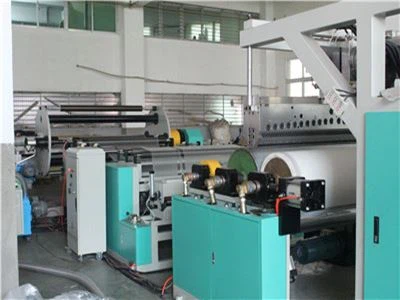
Our Factory
We also invested three plastic film company in aboard as below:
●Vietnam: VINA KAILO CO., LTD
●Indonesia: PT. KAILO SUMBER KASIH CO., LTD
●Egypt: Egyptian Arabic for Paper Productions


FAQ
We're professional peva film manufacturers in China for over 20 years, specialized in providing high quality products. We warmly welcome you to buy cheap peva film from our factory. For price consultation, contact us.
PEVA Film Material, Clear PEVA Tablecloth, PEVA Plastic Film