

Latest Products


Contact Us
- 612, Building 9, Donghai Cross-border E-commerce Ecosphere, Fengze District, Quanzhou
- ivy.su@cnccib.com
- +8613505927626
What is PE Film Machine
Polyethylene Blown Film Machine is a simple and flexible Polyethylene Blown Film Machine that can produce HDPE or LDPE, by simply changing the die head and air ring of Polyethylene Blown Film Machine. Double winding unit, manual or automatic type can be added for Polyethylene Blown Film Machine for lamination.
Advantages of PE Film Machine
Versatility
PE film machines offer great versatility, allowing for the production of a wide range of PE films with varying thicknesses, widths, and surface finishes. This flexibility meets the diverse needs of various industries.
Cost-Effectiveness
These machines are highly efficient, consuming less energy and raw materials per unit of production. This results in cost savings for manufacturers, who can produce PE films at a lower cost, which often translates to more competitive prices for consumers.
Durability and Reliability
PE films produced by these machines are known for their durability and resistance to tearing, puncturing, and abrasion. This makes them suitable for packaging applications where durability is crucial, such as in the shipping and handling of heavy or sharp-edged items.
Excellent Barrier Properties
PE films exhibit excellent barrier properties against moisture, oxygen, and various chemicals. This helps preserve the quality and shelf life of packaged products, especially in food packaging applications where maintaining freshness and preventing spoilage is essential.
Eco-Friendliness
PE films are recyclable and can be easily disposed of in an environmentally responsible manner. Additionally, PE film machines can be designed to use recycled PE materials, further reducing the environmental impact of production.
Ease of Use and Maintenance
Modern PE film machines are designed for user-friendliness, with features like automatic controls and simplified maintenance procedures. This reduces the skill level required to operate and maintain the machines, making them accessible to a wider range of manufacturers.
 Breathable Film Machine
With the same extrusion process as other cast film lines, the cast breathable film line is particularly equipped with the MDO (Machine Direction Orientator) unit.
Add to Inquiry Automatic Extrusion Laminating Machine
Our extrusion laminating machines can meet the different needs of customers for excellent speed, flexibility, reliability and durability. Continuous technological development through innovation is
Add to Inquiry Perforated Film Making Machine
The perforated film machine uses polyethylene to produce microporous film. In this process, the molten resin from the extrusion die is formed into a film, and the vacuum perforation process is
Add to Inquiry PE Film Packing Machine
Automatic PE Film Packing Machine is suitable for wrapping pop-cans, bottles, etc, both with bottom-tray and without bottom-tray, working with PE shrink tunnels.
Add to Inquiry PE Film Extrusion Machine
 is mainly for extrusion and blowing of HDPE, LDPE and LLDPE filmm. If replacing the mould and air ring, it can also produce EVA film.
Add to Inquiry
Why Choose Us
High quality products
We always put customer needs and expectations in the first place, refine on, continuous improvement, to seek every opportunity to do better, to provide customers with their expectations of quality products, to provide customers with the most satisfactory service at anytime.
Professional team
We have a team of skilled and experienced professionals who are well-versed in the latest technology and industry standards. Our team is dedicated to ensuring that our customers get the best service and support possible.
One stop solution
From the begining inquiry and throughout the entire process until you receive the goods. we are dedicated to supporting you every step of the way.
Competitive price
We have professional sourcing team and cost accounting team, stive to reduce cost and profit and provide you a good price.
Attractive design
Every month, our design team will do pattern design based on the lastest fashion trend.
Advanced equipment
We take great measures to ensure that we work with the industry’s highest quality equipment and that our equipment is regularly and meticulously maintained.
A PE Film Machine is a type of machinery used for the production of polyethylene (PE) films. The working process of a PE Film Machine typically involves several key steps.First, the raw materials, usually polyethylene pellets, are loaded into the machine. These pellets are then fed into the extrusion system of the machine.Inside the extrusion system, the pellets are heated and melted to form a molten plastic. The heating is typically achieved through electrical resistance or heating elements. The molten plastic is then forced through a die or nozzle, which gives the plastic its desired shape and thickness, creating the initial film.The formed film then passes through a cooling system, which helps solidify the plastic and set its shape. This can be done using air cooling, water cooling, or a combination of both.After cooling, the film may undergo additional processing steps such as stretching or orienting to enhance its properties. This can improve the film's strength, elasticity, and other characteristics.The final step involves winding the produced film onto a spool or roll for storage and transportation. The machine may have features such as automatic roll change or cutting to facilitate the process.Throughout the operation, the machine is controlled and monitored by a system of sensors and controls to ensure consistent quality and performance. Parameters such as temperature, pressure, and speed can be adjusted to achieve the desired results.The specific working process of a PE Film Machine can vary depending on the design and features of the particular machine. Some machines may have additional functionalities or options for specialized applications.It's important to note that proper operation and maintenance of the machine are crucial for optimal performance and the production of high-quality PE films. Regular inspections, cleaning, and lubrication are typically recommended to ensure the longevity and efficiency of the equipment.If you need more detailed information or specific technical details about the working of a PE Film Machine, it's best to refer to the manufacturer's documentation, user manuals, or consult with experts in the field.
What Are the Main Components of a PE Film Machine
Extruder
The heart of the PE film machine is the extruder, which is responsible for heating and melting the polyethylene pellets into a molten state. The extruder typically features a screw conveyor that mixes and pushes the material forward, ensuring a consistent flow of melted polymer to the die.
Die
Following the extruder, the molten PE is fed through a die, which is a precision-engineered component that shapes the molten plastic into a thin film of uniform thickness. The design of the die determines the film's width and shape, making it a crucial factor in achieving desired product specifications.
Cooling System
Immediately after exiting the die, the hot, stretched film needs to be rapidly cooled to solidify its shape. This is accomplished through a series of chill rolls or water troughs that cool the film quickly, preventing sagging or stretching beyond the intended dimensions.
Winders
Once cooled, the film must be wound onto rolls for storage, shipping, or further processing. The winder is equipped with dancer rolls and tension control mechanisms to ensure the film is wound tightly without creating slack or excessive tension that could lead to defects.
Control Systems
To maintain optimal production conditions and quality, the PE film machine relies on advanced control systems. These systems regulate temperature, speed, cooling time, and tension, ensuring that the process runs smoothly and that the final product meets strict quality standards.
Film Traction Unit
This component ensures that the film is pulled at the right speed and tension from the extruder to the die and then to the cooling unit. It plays a vital role in maintaining film quality by preventing stretching or deformation during the traction phase.
Guiding Systems
Throughout its journey from the extruder to the winding unit, the film must pass through several guiding systems. These consist of rollers, guides, and sensors that ensure the film remains centered and aligned, minimizing the risk of defects caused by misalignment.
Different Types of PE Film Machines

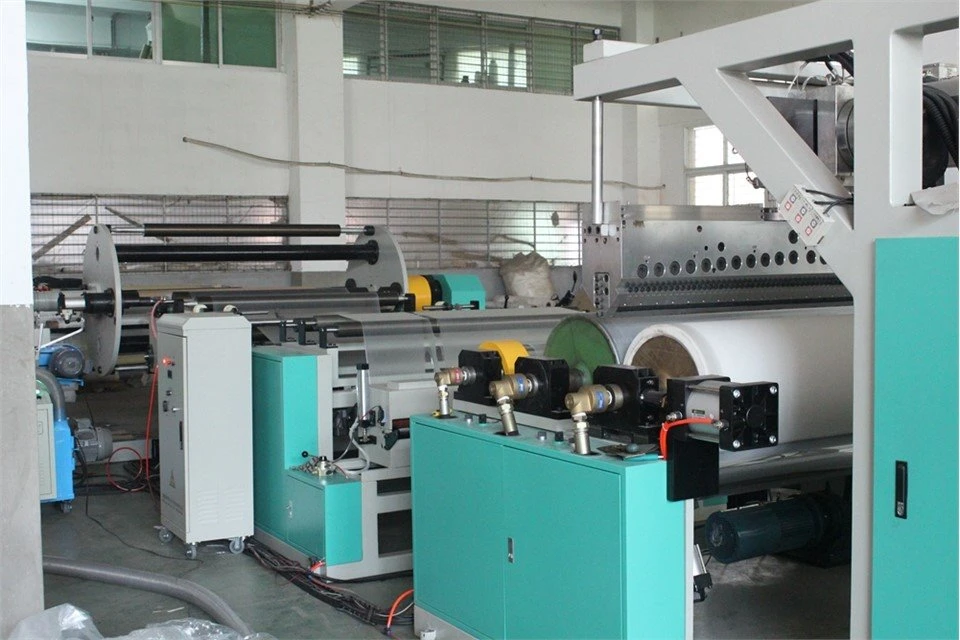


Blown Film Extruders
Blown film extruders are the most common type of PE film machines. They work by extruding molten PE through a circular die and inflating it with air to form a tube-shaped bubble. This method allows for the production of films with high tensile strength, excellent tear resistance, and good optical properties. Blown film extruders can produce various film widths and thicknesses, making them versatile for different applications.
Cast Film Extruders
Cast film extruders are another type of PE film machine that works by extruding molten PE onto a chill roll, where it is flattened and solidified to form a thin film. This method produces films with high clarity, low haze, and excellent surface finish. Cast film extruders are ideal for producing films that require precise thickness control and high-quality appearance, such as packaging films and laminates.
Coextrusion Film Lines
Coextrusion film lines are advanced PE film machines that combine two or more different polymers or additives to produce multilayer films. This technology allows for the creation of films with unique properties, such as improved barrier performance, enhanced stiffness, and specialized surface treatments. Coextrusion film lines offer greater flexibility and customization options compared to single-layer film production.
Slitter Rewinders
Slitter rewinders are not PE film machines in the traditional sense but are crucial downstream equipment used in conjunction with blown or cast film lines. They are used to slit large rolls of film into smaller rolls of a specific width and rewind them onto cores for distribution or further conversion processes. Slitter rewinders play a key role in optimizing production efficiency and meeting customer specifications.
Thermoforming Machines
While not directly producing PE films, thermoforming machines are integral to the production process of PE-based packaging products. These machines heat preformed PE sheets to a pliable temperature and form them over a mold to create containers, trays, and lids. Thermoforming machines complement PE film machines in the packaging value chain.
What Is the Production Capacity of a Typical PE Film Machine
Small-scale machines
Small-scale PE Film Machines, commonly used for producing films for packaging and agricultural applications, have a production capacity ranging from 50 to 200 kilograms per hour (kg/hr).
Medium-scale machines
Medium-scale PE Film Machines are suitable for producing films for industrial and commercial applications. These machines have a production capacity ranging from 200 to 500 kg/hr.
Large-scale machines
Large-scale PE Film Machines are designed for high-volume production and can produce films at a rate of 500 to 1,500 kg/hr or more.
Multi-layer co-extrusion machines
Multi-layer co-extrusion machines are capable of producing films with multiple layers, providing enhanced properties such as barrier protection, heat sealing, and printability. The production capacity of these machines can range from 200 to 1,000 kg/hr, depending on the number of layers and the machine's configuration.
High-speed machines
High-speed PE Film Machines are designed to achieve higher production rates. These machines can produce films at speeds ranging from 200 to 500 meters per minute (m/min) or more, resulting in a higher production capacity.
Customized machines
Customized PE Film Machines can be designed to meet specific customer requirements, including higher production capacities, unique film properties, or specialized applications. The production capacity of these machines can vary widely based on the customer's specifications.
What Is the Maximum Width That Can Be Achieved with a PE Film Machine
Machine size and configuration
The physical dimensions and design of the PE Film Machine play a significant role in determining the maximum width it can produce. Larger machines may have the capacity to handle wider films, but they also require more space and higher production costs.
Extrusion technology
Different extrusion techniques and systems may have limitations in terms of the width they can achieve. Some machines may be limited by the diameter of the extrusion die or the width of the cooling and calibration rollers.
Material properties
The characteristics of the polyethylene (PE) material used can also affect the maximum width. Thicker or more challenging materials may require wider machines to ensure proper processing and quality.
Industry standards and requirements
Specific industries or applications may have standard widths for PE films. Meeting these standards or accommodating customer requirements can also influence the maximum width produced by the machine.
Customization and specialized machines
In some cases, custom-designed or specialized PE Film Machines can be manufactured to achieve wider widths. These machines may have modifications or additional features to handle larger film widths.
Can a PE Film Machine Produce Different Thicknesses of Films
A PE film machine is designed with the capability to produce films of various thicknesses, ranging from very thin films used for wrapping and packaging to thicker films required for specific industrial applications. The ability to adjust the film thickness is achieved through several mechanisms and controls integrated within the machine.
The extruder, which is the central component of a PE film machine, plays a pivotal role in determining the thickness of the film produced. The screw speed of the extruder directly influences the rate at which the molten PE is pushed through the die, thus affecting the film's thickness. By increasing or decreasing the screw speed, operators can precisely control the thickness of the film being produced.
The die design also contributes to the variation in film thickness. Dies can be engineered with different throat sizes or with adjustable lips to control the spread of the molten polymer as it exits the die. By altering the geometry of the die, the machine can produce films of varying thicknesses while maintaining other physical properties such as clarity and tensile strength.
The gap between the chill rolls or cooling system and the die also affects film thickness. Adjusting this distance can either increase or decrease the amount of stretching that occurs as the film exits the die and enters the cooling phase, thereby influencing the final thickness of the film.
The take-up or winding system of the PE film machine can influence film thickness indirectly. By adjusting the tension on the film as it's wound onto the roll, operators can prevent the film from stretching or compressing excessively, which could otherwise alter its intended thickness.
The control system of a PE film machine is typically equipped with sensors and feedback loops that monitor the parameters such as temperature, speed, pressure, and film tension. These controls allow for real-time adjustments to be made to the process variables, ensuring consistency in film thickness even when switching between different production orders or batches.
What Are the Common Materials Used in the Production of PE Films
Low-Density Polyethylene (LDPE)
LDPE is one of the most widely used materials for film production due to its flexibility, clarity, and good sealing abilities. It is often employed for applications such as garbage bags, frozen food wrap, and agricultural films where flexibility is a key requirement. LDPE films also have good impact resistance and are somewhat transparent.
Linear Low-Density Polyethylene (LLDPE)
LLDPE offers enhanced strength, durability, and better stress crack resistance compared to LDPE. It is commonly used for stronger bags, construction films, and pallet wraps where higher tensile strength and toughness are needed. LLDPE films can be thinner than those made from LDPE while still providing the necessary protection and durability.
High-Density Polyethylene (HDPE)
HDPE is known for its rigidity, higher melting point, and excellent chemical resistance. It is often used for producing films for shipping sacks, bottle liners, and rigid containers. HDPE films are less flexible than LDPE and LLDPE films but provide better support for heavier loads.
Ethylene-Vinyl Acetate (EVA)
EVA is a copolymer that can be added to PE formulations to improve the film's clarity, flexibility, and sealability. EVA is particularly useful for packaging sensitive items where a softer, more cushioning film is required.
Metallocenes
Metallocene-catalyzed polyethylene (mPE) offers a new class of PE films with improved performance characteristics. mPE films have higher densities than LLDPE but maintain similar flexibility. They are often used in demanding applications like stretch films, shrink films, and heavy-duty bagging films.
Additives
Besides the primary PE materials, various additives are used to enhance the properties of PE films. These can include UV stabilizers for outdoor durability, slip agents for easier handling, anti-fog coatings for packaging in controlled environments, and colorants for aesthetic appeal or product differentiation.
Biobased Polyethylene
In recent years, there has been an increased focus on sustainability, leading to the development of biobased PE derived from renewable resources. This material provides a more environmentally friendly alternative without compromising the performance characteristics of traditional petroleum-based PE films.
How Is the Quality of the PE Film Ensured During the Manufacturing Process


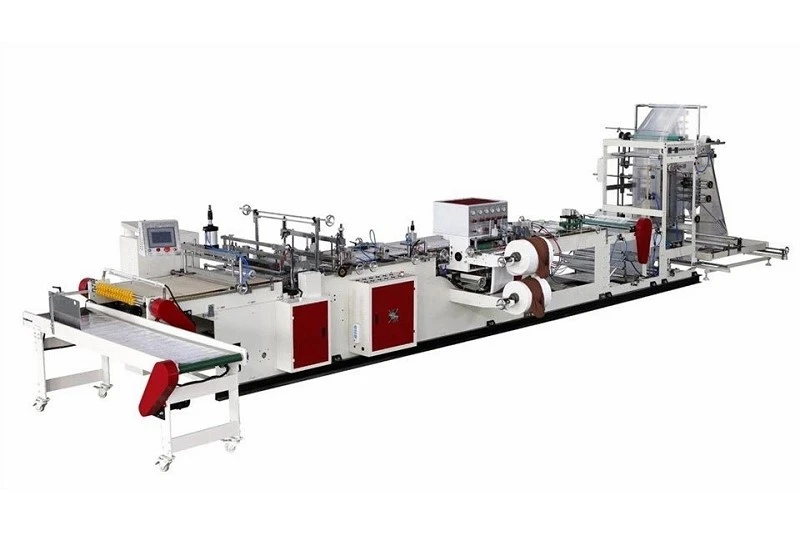
Material Quality Control
Before production begins, the raw materials undergo rigorous testing to ensure they meet the required specifications. This includes checks for the correct resin type, density, molecular weight distribution, and any additives or contaminants.
Extrusion Process Control
The extruder parameters, such as screw speed, melt temperature, and output rate, are closely monitored and adjusted in real-time to maintain consistent film quality. Any deviations can lead to variations in film thickness, clarity, or mechanical properties.
Die Design and Performance
The shape and design of the die significantly influence the film’s characteristics. High-quality dies are precision-engineered to ensure uniformity of the film as it exits the die.
Cooling System Efficiency
Proper cooling is critical to achieving a smooth and wrinkle-free film. The cooling system, usually a set of chill rolls, must maintain consistent temperature control to prevent thermal stress and ensure uniform film thickness.
Tension Control
Excessive tension during film production can cause stretching and thinning, while insufficient tension can result in slack and variability. Tension control systems automatically adjust to maintain the ideal tension level throughout the process.
Film Thickness Measurement
Continuous inline measurement devices, such as beta backscattering gauges, are used to monitor film thickness and ensure it remains within tight tolerances.
Surface Quality Inspection
Visual inspection systems, including cameras and sensors, can detect surface defects such as scratches, streaks, or blisters, allowing immediate corrections or the removal of defective film.
Coefficient of Variation (COV) Analysis
Statistical analysis of process data, including COV calculations, helps identify and address any inconsistencies in the film production process.
Final Product Testing
After production, samples of the finished film undergo comprehensive testing to assess mechanical properties (strength, elongation, puncture resistance), optical properties (clarity, gloss), and barrier properties (moisture, gas permeability).
Quality Management Systems
Compliance with international standards and certifications, such as ISO 9001, demonstrates the manufacturer's commitment to quality management practices throughout all aspects of production.
How Is the Temperature Controlled in a PE Film Machine
The machine is equipped with heating elements, such as electric resistance heaters, to provide the necessary heat. Thermocouples or temperature sensors are used to measure the temperature at various points within the machine, allowing for precise temperature monitoring.
The PE Film Machine may have multiple heating zones, each with its own temperature controller. This allows for independent temperature adjustment in different sections of the machine, such as the extruder, die, and calibration rollers. Zone control helps achieve optimal temperature profiles throughout the extrusion process.
These advanced control systems are used to regulate the heating elements based on the temperature feedback from the sensors. PID (Proportional-Integral-Derivative) controllers can automatically adjust the power output to the heating elements, maintaining the desired temperature setpoints with high accuracy.
In addition to heating, proper cooling is also important in the temperature control process. Cooling fans, air or water cooling systems may be used to remove excess heat and regulate the temperature, especially in areas like the die and calibration rollers.
The machine typically has a visual display or interface that shows the current temperature readings at different locations. Operators can monitor these readings and make necessary adjustments to ensure the machine is operating within the specified temperature range.
Regular calibration of the temperature sensors and controllers is essential to ensure accurate temperature measurement and control. This helps maintain the reliability and consistency of the temperature control system.
Experienced operators or engineers may fine-tune the temperature settings based on the specific characteristics of the polyethylene material and the desired film properties. They consider factors like melt flow index, processing speed, and film thickness to determine the optimal temperature profiles.
Products Description
CCIB was established on year 2001, it's producing plastic machine and plastic film as the core industry of manufacturing enterprises. The total assets is 1.2 billion, with 500 workers.


FAQ
Q: Can a PE film machine be upgraded?
Q: What is the typical power consumption of a PE film machine?
Q: How is the output speed of a PE film machine controlled?
Q: What is the importance of proper venting in a PE film machine?
Q: How do you choose the right PE film machine for your application?
Q: What are some innovative features available in modern PE film machines?
Q: How do you recycle scrap produced by a PE film machine?
Q: What is the impact of environmental regulations on PE film machines?
Q: How do you ensure compliance with industry standards when operating a PE film machine?
Q: What is the role of the control system in a PE film machine?
Q: How do you train operators for a PE film machine?
Q: How does a PE film machine work?
Q: What are the main components of a PE film machine?
Q: What is the difference between cast and blown film machines?
Q: What are the advantages of using a PE film machine?
Q: What are the applications of PE films produced by a machine?
Q: How do you troubleshoot common issues with a PE film machine?
Q: What raw materials are used in a PE film machine?
Q: How do you maintain a PE film machine?
Q: What safety precautions should be taken when operating a PE film machine?
We're professional pe film machine manufacturers in China for over 20 years, specialized in providing high quality products. We warmly welcome you to buy cheap pe film machine from our factory. For price consultation, contact us.
Breathable Film Machine, PE Film Packing Machine, Perforated Film Making Machine