

Latest Products


Contact Us
- 612, Building 9, Donghai Cross-border E-commerce Ecosphere, Fengze District, Quanzhou
- ivy.su@cnccib.com
- +8613505927626
What is Bag Making Machine
Bag making machine is a device used for the production of bags, such as paper bags or plastic bags. It can be either fully automatic or semi-automatic, depending on the model and make. The machine typically involves several stages, including material feeding, bag formation, sealing, cutting, and finally, the discharge of the completed bags.
Advantages of Bag Making Machine
High Productivity
One of the primary advantages of a Bag Making Machine is its ability to produce bags at a high rate. Automated processes and efficient designs enable the machine to create a large number of bags in a short period, significantly increasing productivity and output.
Consistency and Quality
By using a machine, you can achieve consistent bag dimensions, seals, and overall quality. The precision and accuracy of the machine ensure that each bag meets the desired specifications, reducing the chances of defects or variations.
Cost Savings
Investing in a Bag Making Machine can lead to cost savings in the long run. By eliminating the need for extensive manual labor, the machine reduces production time and labor costs. Additionally, the high output enables efficient use of materials, minimizing waste.
Customization Options
Many Bag Making Machines offer customization features, allowing businesses to create bags with specific dimensions, designs, or branding. This flexibility enables companies to meet the unique requirements of their customers and differentiate their products in the market.
Versatility
These machines can handle a variety of materials, including different types of plastics, papers, and fabrics. This versatility allows for the production of different bag styles, such as shopping bags, garbage bags, or specialized packaging bags.
Improved Sealing and Strength
The sealing mechanisms of a Bag Making Machine typically provide strong and reliable seals, ensuring that the bags are leak-proof and capable of holding their contents securely. This is especially important for applications where the integrity of the bag is critical.
Easy Operation and Maintenance
Modern Bag Making Machines are designed for user-friendly operation. They often come with intuitive controls and interfaces, making it easier for operators to learn and use the equipment. Additionally, regular maintenance tasks are simplified, ensuring the machine's longevity and optimal performance.
Space Efficiency
Bag Making Machines are generally designed to occupy a relatively small footprint, making them suitable for both large and small production facilities. Their compact nature allows for efficient use of available space.
 Bag Making Machine Taiwan
This machine is specially designed for online production of paper bags with flat handles. The handle can be folded inside the bag or stand upright when coming out.
Add to Inquiry Plastic Garbage Bag Making Machine
The garbage bag making machine can produce rolling bags. Can be made into star-sealed garbage bags, or quarter-fold garbage bags. The full-automatic garbage bag making machine can reduce labor.
Add to Inquiry Plastic Bag Making Machine Germany
Germany Plastic Bag Making Machine is suitable for LDPE & CPP film materials for various applications like bread bags , hygiene bags, shopping bags, mailing & courier bags and many more.
Add to Inquiry Automatic Bag Making Machine Delhi
This machine focuses on the production of composite, coated and uncoated three-dimensional box bags with handles.
Add to Inquiry Plastic Bag Making Machine Europe
The plastic machine replaces the original electric heating wire type self-made equipment, and has the advantages of stable product quality, automatic control, and convenient operation and maintenance.
Add to Inquiry
Why Choose Us
High quality products
We always put customer needs and expectations in the first place, refine on, continuous improvement, to seek every opportunity to do better, to provide customers with their expectations of quality products, to provide customers with the most satisfactory service at anytime.
Professional team
We have a team of skilled and experienced professionals who are well-versed in the latest technology and industry standards. Our team is dedicated to ensuring that our customers get the best service and support possible.
One stop solution
From the begining inquiry and throughout the entire process until you receive the goods. we are dedicated to supporting you every step of the way.
Advanced equipment
We take great measures to ensure that we work with the industry’s highest quality equipment and that our equipment is regularly and meticulously maintained.
Attractive design
Every month, our design team will do pattern design based on the lastest fashion trend.
Competitive price
We have professional sourcing team and cost accounting team, stive to reduce cost and profit and provide you a good price.
Types of Bag Making Machine
Flat Bag Making Machine
This type of machine is used to produce flat bags, which are commonly used for packaging various products. It can handle a wide range of materials such as plastic films, paper, and laminated materials. The machine cuts the material into the desired bag size, seals the edges, and optionally adds handles or other features.
Bottom Seal Bag Making Machine
This machine is used to produce bags with a sealed bottom, commonly known as bottom-seal bags. It is suitable for producing bags from materials like polyethylene (PE) or polypropylene (PP). The machine forms the bag by sealing the bottom and sides simultaneously, creating a strong and durable bag.
Side Seal Bag Making Machine
This type of machine is used to produce bags with a sealed side, commonly known as side-seal bags. It is ideal for producing bags from materials like polyethylene (PE) or polypropylene (PP). The machine forms the bag by sealing one side and the bottom, allowing for easy loading and sealing of the bag's contents.
T-Shirt Bag Making Machine
T-Shirt Bag Making Machines are specifically designed to produce T-shirt bags, which are widely used in retail stores. These machines can handle materials like high-density polyethylene (HDPE) or low-density polyethylene (LDPE). They form the bag shape, cut the handles, and seal the sides, creating a convenient and cost-effective bag.
Zipper Bag Making Machine
Zipper Bag Making Machines are used to produce bags with zipper closures, providing a resealable and convenient packaging solution. These machines can handle materials like polyethylene (PE), polypropylene (PP), or laminated films. They incorporate additional modules for attaching zippers and sealing the bag around the zipper.
Gusset Bag Making Machine
Gusset Bag Making Machines are designed to produce bags with gussets, which are expandable sides that allow for increased capacity. These machines can handle materials like polyethylene (PE), polypropylene (PP), or laminated films. They form the bag shape, create the gussets, and seal the edges, providing a versatile bag for various applications.
Courier Bag Making Machine
Courier Bag Making Machines are used to produce bags specifically designed for courier and shipping purposes. These machines can handle materials like polyethylene (PE), polypropylene (PP), or laminated films. They form the bag shape, incorporate security features like tamper-evident seals or adhesive strips, and provide a durable and secure packaging solution.
Woven Bag Making Machine
Woven Bag Making Machines are used to produce bags made from woven polypropylene (PP) or polyethylene (PE) fabric. These machines weave the fabric, cut it into the desired bag size, and optionally add handles or other features. Woven bags are commonly used for packaging agricultural products, construction materials, and other heavy-duty applications.
Dimensions
The machine's dimensions typically include the length, width, and height. These measurements are important to ensure the machine fits through doorways, corridors, and onto transportation vehicles. Additionally, the machine may have specific clearance requirements around it for proper operation and maintenance.
Weight
The weight of the bag making machine is an important factor for transportation. It determines the type of equipment needed to move the machine, such as cranes, forklifts, or pallet jacks. The weight also affects the stability and structural integrity of the installation surface, as it needs to support the machine.
Transportability
Some bag making machines are designed to be disassembled for easier transportation. This allows for more flexibility in moving the machine to different locations. The disassembled components should be labeled and packed properly to ensure easy reassembly at the installation site.
Installation Considerations
When planning the installation, consider the floor space required for the machine, as well as access to electrical outlets, ventilation, and other necessary utilities. The machine may also require a level surface and proper anchoring to ensure stability.
Shipping and Handling
If the machine is being shipped, it is important to choose a reliable shipping company that can handle the dimensions and weight of the machine. Proper packaging and securing of the machine during transportation are crucial to prevent damage.
What Is the Main Working Principle of the Bag Making Machine
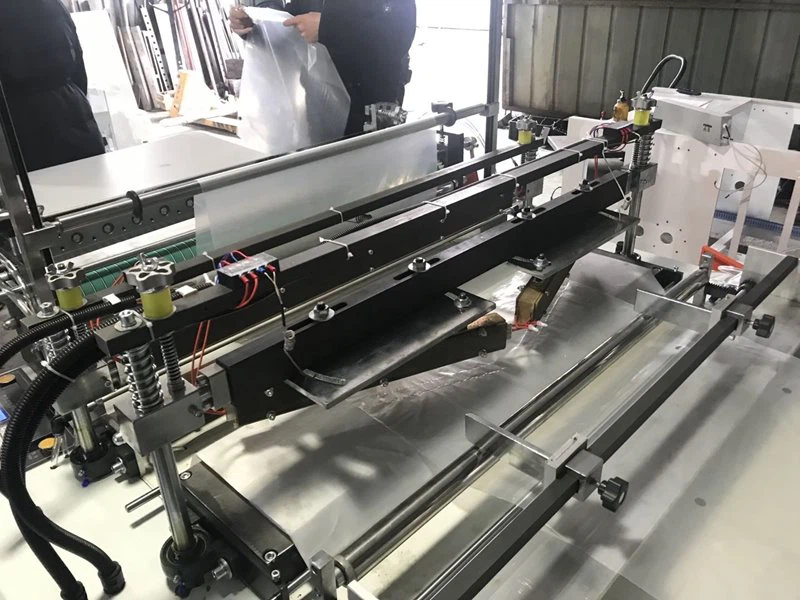
The bag making machine is a device used to manufacture various types of bags, such as food bags, agricultural film bags, composite bags, etc. It consists of several components, including a bag-making mechanism, a sealing mechanism, a cutting mechanism, and a control system. The basic working principle of the bag making machine involves feeding raw materials (such as plastic films) into the machine, where they are then processed through the various mechanisms to create finished bags.
This mechanism is responsible for shaping the raw materials into the desired bag shape. The plastic film is fed into the machine and then flattened by a pair of rollers. Then, it is cut into the required width. The film is then sent to the bag-making mechanism. The bag-making mechanism consists of two pairs of rollers, one pair for folding and one pair for pressing. The first pair of rollers folds the film in half, while the second pair of rollers presses the fold tightly to form the bottom seal of the bag.
After the bags have been formed, the sealing mechanism is responsible for sealing the bottom and top of the bags. The sealing temperature is controlled by a thermostat, which ensures that the heat seal is strong and durable. The sealing time can be adjusted according to different requirements. Once the bags are sealed, the cutting mechanism cuts the bags from the continuous film. A sharp blade is used to ensure clean and precise cuts. The control system is the "brain" of the bag making machine, controlling all aspects of its operation. It includes various sensors and controls that monitor and adjust the temperature, speed, and other parameters of the machine. This ensures that the bags produced meet the required specifications and quality standards.

Most bag making machines operate on alternating current (AC) power. The standard AC voltage in many countries is 220V or 110V. However, some machines may be designed to operate on other AC voltages, such as 380V or 440V. Some bag making machines may use direct current (DC) power supply. DC power is often used in portable or battery-powered machines. The voltage requirements for DC-powered machines can vary depending on the specific application and battery configuration. Larger bag making machines or machines with higher power requirements may use three-phase AC power. Three-phase power is typically provided at voltages such as 380V or 440V and is used to power industrial machinery and equipment. If the power supply voltage in your location does not match the machine's voltage requirements, you may need to use a voltage converter or transformer to step up or step down the voltage. These devices can be purchased separately and are available in various voltage ratings and capacities.
Bag Making Machine Materials
Plastic Films
This is one of the most commonly used materials for bag making. Plastic films come in different types, such as polyethylene (PE), polypropylene (PP), and polyester (PET). These films can be clear, colored, or printed with various designs and logos. Plastic films are often used for making shopping bags, garbage bags, and packaging bags.
Paper
Paper is another popular material for bag making, especially for eco-friendly and sustainable options. Kraft paper, corrugated cardboard, and art paper are commonly used. Paper bags are biodegradable and recyclable, making them an attractive choice for environmentally conscious consumers. Paper bags can be plain or decorated with printing or finishes.
Non-woven Fabrics
Non-woven fabrics are made from synthetic or natural fibers and offer durability and strength. Polypropylene non-woven fabric is commonly used for making tote bags, shopping bags, and promotional bags. Non-woven fabrics are often lightweight, reusable, and available in a range of colors and textures.
Fabric
Fabrics like cotton, canvas, or polyester are used to create more stylish and high-quality bags. Fabric bags can be sewn or fabricated using a bag making machine. These bags are popular for fashion purposes, as well as for carrying heavier items.
Aluminum Foil
Aluminum foil provides excellent barrier properties, making it suitable for packaging applications. Aluminum foil bags are often used in the food, pharmaceutical, and cosmetic industries to protect products from moisture, light, and oxygen.
Biodegradable Films
With the increasing focus on sustainability, biodegradable films made from materials such as PLA (polylactic acid) or PBAT (polybutylene adipate terephthalate) are becoming more common. These films breakdown naturally over time, reducing the environmental impact.
Composite Materials
Some bag making machines can handle composite materials that combine multiple layers of different films or fabrics. This allows for the creation of bags with specific functional properties, such as enhanced barrier protection, heat resistance, or strength.
Can Bag Making Machines Handle Multiple Layers of Material Simultaneously

Lamination
In this process, multiple layers of film or fabric are bonded together using heat and pressure. The resulting laminate provides increased strength, barrier properties, or printability. Bag making machines can handle various combinations of materials for lamination, such as plastic films, paper, non-woven fabrics, or aluminum foil.
Co-extrusion
This process involves extruding two or more materials simultaneously through a single die to create a multi-layer film. The resulting film may have layers of different polymers or additives to achieve desired properties such as barrier protection, heat resistance, or optical clarity. Bag making machines can use co-extruded films to produce bags with enhanced performance characteristics.
Blown film extrusion
In this process, a bubble of molten plastic is extruded through a die and then collapsed and formed into a tube. Multiple layers can be added during the extrusion process by using multiple extruders or feedblocks. The resulting multi-layer blown film offers improved properties such as barrier protection, mechanical strength, or heat sealing capabilities. Bag making machines can handle blown film extrusion to produce bags with customizable layers.

Composite Structures
Some bag making machines can handle composite structures that combine multiple layers of different materials. For example, a bag might have an outer layer of plastic film for durability, a middle layer of aluminum foil for barrier protection, and an inner layer of polyethylene or polyester for heat sealing. These composite structures can be achieved using various techniques such as lamination, co-extrusion, or adhesive bonding.
What Are the Automated Functions of the Bag Making Machine
Material feeding and cutting: The bag making machine can automatically feed the required materials, such as plastic films or paper, and cut them into the appropriate size and shape according to the set parameters.
Sealing and welding: The machine can automatically complete the sealing and welding processes to join the cut materials and form a complete bag.
Print and marking: Some bag making machines are equipped with printing and marking functions, which can automatically print logos, patterns, or text on the bag.
Packing and counting: Automated packing and counting functions can be included to package and count the finished bags for subsequent processing or transportation.
Error detection and alarm: The machine may have error detection sensors to detect problems such as material jams or malfunctions and issue an alarm to prompt operator intervention.
Parameter setting and adjustment: The bag making machine can be programmed and adjusted to meet different bag size, shape, and production requirements.
Data tracking and monitoring: Advanced bag making machines may have the ability to track and monitor production data, such as production speed, output, and quality parameters, to facilitate production management and optimization.
What Are the Main Components of the Bag Making Machine
Frame and Body
The frame forms the structure and support of the bag making machine. It provides a stable platform for mounting other components and ensures the machine's durability and stability during operation.
Material Feeding System
This system is responsible for feeding the raw materials, such as plastic films or papers, into the machine. It may consist of rolls, rollers, or feeding mechanisms that guide the material smoothly into the next processing stage.
Cutting Unit
The cutting unit cuts the material into the desired size and shape. It can include cutting blades or lasers that precisely cut the material to ensure accurate bag dimensions.
Sealing Mechanism
The sealing mechanism is crucial in joining the cut edges of the material to create a sealed bag. This may involve heat sealing, ultrasonic sealing, or other sealing techniques depending on the type of material being used.
Control Panel and Electronics
The control panel allows the operator to set and adjust various parameters of the bag making process. It may include controls for bag size, sealing time, temperature, and other settings. The electronics handle the machine's logic and automation functions.
Conveyor or Output System
A conveyor or output system is often included to transport the finished bags away from the machine. It can be a belt conveyor, chute, or other mechanism that directs the bags to the next stage of the production line or a collection area.
Motor and Drive System
The motor and drive system provide the power and motion to drive the different components of the machine. It may include motors, gears, belts, or chins to ensure smooth and efficient operation.
Heating and Cooling Systems
Some bag making machines require heating elements to seal the materials, while others may have cooling systems to control temperature during the process. These systems ensure optimal sealing performance and prevent damage to the materials.
Sensor and Monitoring Devices
Sensors can be used to detect issues like material jams, incorrect positioning, or quality defects. They help ensure the machine operates smoothly and alert the operator in case of any problems.
Optional Add-Ons
Depending on the specific application and customer requirements, bag making machines can have optional components. These may include printers for printing logos or labels, automated packing systems, and quality inspection devices.
Products Description
CCIB was established on year 2001, it's producing plastic machine and plastic film as the core industry of manufacturing enterprises. The total assets is 1.2 billion, with 500 workers.


FAQ
Q: What are the primary components of a bag making machine, and how do they interact during the bag-making process?
Q: Can bag making machines handle multiple layers of material simultaneously?
Q: How do different types of sealing technologies (e.g., hot air, impulse, bar sealers) affect bag quality and production speed?
Q: How is the accuracy of bag dimensions controlled on a bag making machine?
Q: What are the advantages and disadvantages of manual versus automatic bag making machines?
Q: How do I determine the appropriate bag making machine speed for my production needs?
Q: Are there any special considerations when using biodegradable or compostable materials in a bag making machine?
Q: How does the thickness of the bag material affect the operation of a bag making machine?
Q: What are the common causes of downtime in bag making machines, and how can they be prevented?
Q: How do I calculate the total cost of ownership (TCO) for a bag making machine, including purchase price, maintenance, and production costs?
Q: What is the typical power requirement for a bag making machine, and how does it vary with machine size and production capacity?
Q: How does the choice of bag closure type (e.g., zip lock, adhesive, heat seal) influence the selection of a bag making machine?
Q: What role does automation play in modern bag making machines, and what benefits does it provide?
Q: How can I ensure that a bag making machine meets regulatory compliance for food-grade or pharmaceutical packaging?
Q: What are the key differences between a bag making machine and a pouch making machine?
Q: How can I minimize material wastage during the bag-making process to improve sustainability?
Q: What are the potential environmental impacts of running a bag making machine, and how can they be mitigated?
Q: How does the integration of a bagging machine with other equipment in a production line affect overall efficiency?
Q: What are the safety precautions that should be taken when operating a bag making machine?
Q: How can I train my staff to operate a bag making machine efficiently and safely?
We're professional bag making machine manufacturers in China for over 20 years, specialized in providing high quality products. We warmly welcome you to buy cheap bag making machine from our factory. For price consultation, contact us.
coffee mug printing machine, sublimation mug press, cloth poly bag making machine